


In Merited Recognition of Adolfo Serrano
A few days ago, the Maritime Rescue Coordination Center of Tarifa, represented by its head Adolfo Serrano, received a special recognition and tribute sponsored by the City Council of Algeciras. He was awarded the well-deserved distinction for his extensive work in saving lives throughout the vast area of the Strait under his responsibility, presented by the mayor, José Ignacio Landaluce. Mayor Landaluce expressed his words of gratitude for the immense work carried out by the mentioned center, especially in recent years, and presented him with the corresponding plaque of distinction.
The Maritime Rescue Coordination Center of Tarifa began its journey in 1987 as the coordinator and overseer of maritime traffic in the Strait and in 1992 became the first center in Spain dedicated to Maritime Rescue; subsequently, new similar positions were created along the Spanish coasts, totaling twenty.
Considering that the annual traffic of vessels through the Strait amounts to a considerable figure of 115,000 units, it is easy to grasp the enormous functions and responsibilities carried out by the center. However, when we add to this the incessant illegal migration traffic in the area, which was estimated at around two thousand people annually until 2016 and has significantly increased since then, surpassing the difficult-to-control figure of 20,000 people in 2018, the scale of their work becomes even clearer.
To provide such a stressful and responsible service, the Tarifa Center is composed of a team of 21 people, all of whom are sailors, whose dedication and service can only be fulfilled in an exemplary and enviable manner, knowledgeable about the sea and its dangers, and whose experience and knowledge can be verified day by day.
To fulfill this selfless mission, they have a ready and permanently attentive team consisting of: three tugboats, one helicopter, a patrol boat, and nine “Salvamares” vessels covering the area from Almería to Huelva; all under the direction and supervision of the Maritime Captaincy of Algeciras, which is responsible for the area with the highest maritime traffic in Spain and a port, Algeciras, that also holds the record for the peninsula in the number of ship calls, tons moved, and number of passengers.
It is always very satisfying to receive this kind of news, especially when it is an old colleague and friend who has been honored for his good work. It was in the port of Bilbao in November of the distant year 1981 when a very young Adolfo Serrano boarded the ship “Guadalupe I” to take up the position of third officer; the captain on board at that time was the master of students and pilots, José Ángel González Guisande, who, like others, was a magnificent "prolonger" of the school that for many was Compañía Trasatlántica. The chief engineer at that time was the author of this piece.
In 1991, Adolfo moved to the land organization of the Company, initially working in the technical department in Madrid, and later moving to the Barcelona Delegation where he worked alongside Manel Brull – another very remembered and beloved captain – in the control and organization of the joint venture formed by Trasatlántica and those also historic companies: Venezolana de Navegación and Grancolombiana.
In 1995, after the disappearance of “that” Trasatlántica, Adolfo joined the Maritime Rescue Society. Many colleagues who lost their jobs at Trasatlántica found work immediately, many in positions of considerable responsibility as port pilots, directors in important shipping companies and stevedoring companies, maintenance managers in significant maritime terminals, and in the case we discuss today, Maritime Rescue directors in one of the most trafficked areas in the world in the broadest sense of the word. Another case with the same position in the port of Santander was that of the well-known and appreciated Carlos Monje, head of the purchasing department of the Company for several years.
Congratulations Adolfo, on behalf of all of us who had the opportunity to enjoy your good work, prudence, and sense of modesty during those voyages across the North Atlantic.

Family photo with civil and military authorities and distinguished guests

Rescue of a boat by the vessel 'Salvamar Alkaid'

Alfredo Serrano in a rescue operation with helicopter Helimer

Maritime Rescue attention is permanent and in any situation
Photos: provided


Related posts
👁️ 4,409 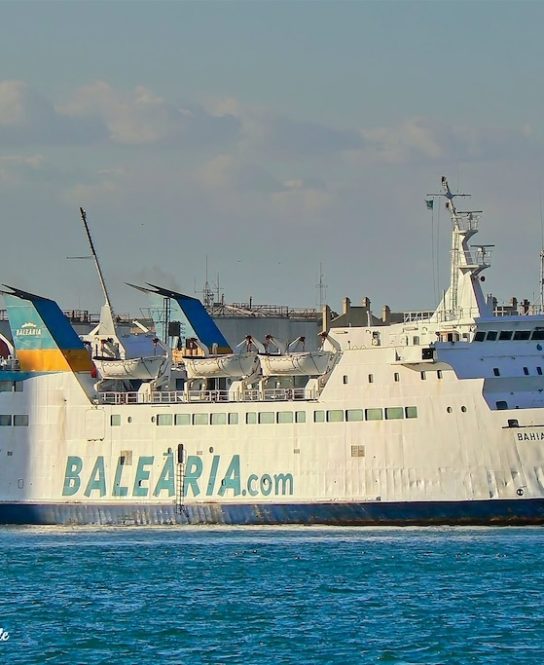

- by Juan Carlos Díaz Lorenzo
- 4 days ago
The ferry “Don Cándido”, formerly “Bahía de Málaga”, arrives at the scrapyard after 46 years of maritime life


👁️ 1,160 
Most Recent
👁️ 1,070 
👁️ 2,570 
👁️ 17,694 