

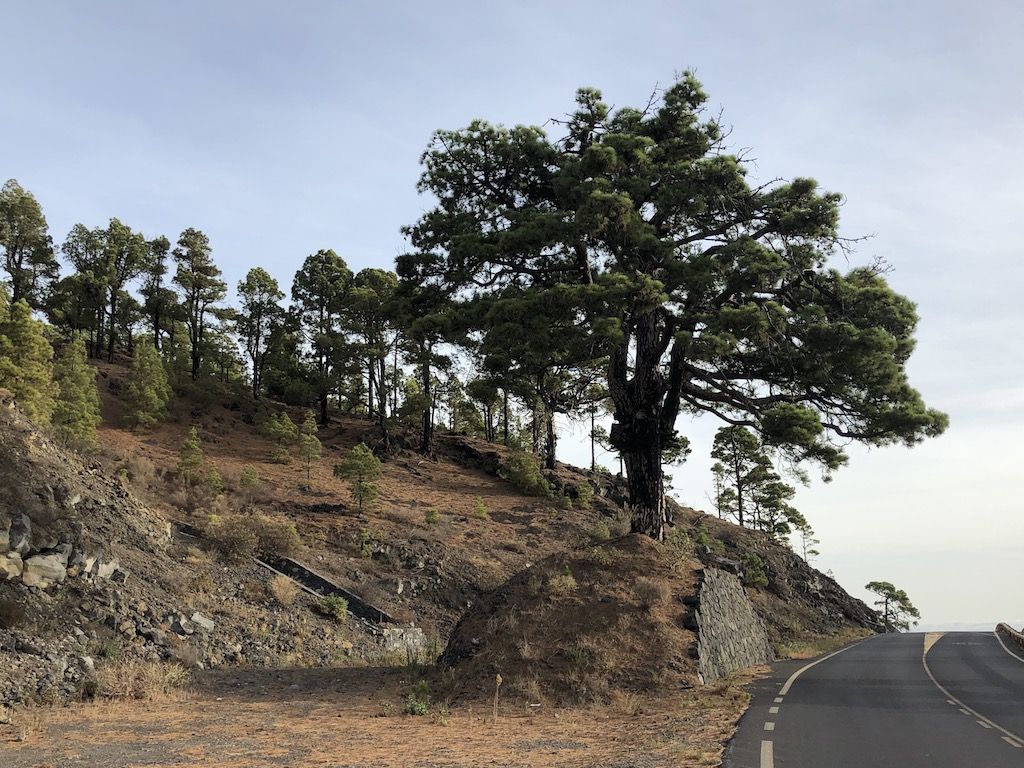
Pine of Consolation
The Pine of Consolation is a magnificent specimen of Canary pine, part of the lush pine forest that covers the Fuencaliente mountain in La Palma over the lava flows of the Martín volcano, an eruption that occurred in 1677. Located on the right bank of the southern main road, it has survived the successive wildfires that have historically affected this part of the island.
However, the site is sadly associated with the horror and barbarity of the civil war in La Palma. About a hundred meters uphill, among pines and vineyards, five corpses of people murdered by coup plotters were found in 1996, buried in a mass grave, including the last republican mayor of Los Llanos de Aridane, Francisco Rodríguez Bethencourt. In 2006, six more corpses were discovered, and two more in 2007.
The location was achieved thanks to information provided by Melo Pérez Díaz, who conveyed to the families of the disappeared the story that his father had once told him about the disappearance and murder of that group of people, which time has come to know as the "thirteen of Fuencaliente," although they were not residents of this municipality.
The forensic studies conducted on the remains reveal the brutality of the crimes committed against the victims, some of whom were leaders or militants of leftist organizations and others who helped supply provisions to “the rebels,” as those who decided to flee to the mountains of the island when it was taken by military forces starting July 25, 1936, the date of the landing of the gunboat “Canalejas” in Santa Cruz de La Palma, were known.
The Historical Memory Association of La Palma and the Insular Council plan to erect a monument next to the Pine of Consolation, to remember the victims executed at the beginning of Francoist repression. A space that will also serve to console their families, whose efforts to find their missing loved ones have succeeded seventy years after such events occurred. The monument is intended to be a dignified intervention that remembers the victims of repression and serves as a memory of what must never happen again.
Photo: Juan Carlos Díaz Lorenzo


Related posts


- by Juan Carlos Díaz Lorenzo
- 3 years ago
The Fertile Memory of Pedrín, Countryman and Childhood Friend

- by Juan Carlos Díaz Lorenzo
- 3 years ago
The Steep Slope of the Las Indias Neighborhood

- by Juan Carlos Díaz Lorenzo
- 4 years ago
An Aerial View of the San Antonio Volcano Crater
Most Recent
👁️ 1,378 
👁️ 3,938 
👁️ 949 