

Navantia and Larsen & Toubro to Offer Submarines to India
Navantia signed on Monday, the 10th, with the Indian company Larsen & Toubro a collaboration agreement (teaming agreement) in order to jointly present a technical-commercial offer for the P75 (India) submarine program of the Indian Navy, reports the Spanish public shipbuilding company.
This program “requires that each Indian bidder partners with a foreign collaborator to execute the construction program” of six conventional submarines equipped with air-independent propulsion (AIP), along with spare parts, simulators, ground support elements, training, and technology transfer (ToT).
Valued at over 4.8 billion euros, this is the largest acquisition project in the defense sector. It will be followed by a 30-year life cycle maintenance contract of similar value. P75(I) would be the first program processed under the ambitious strategic partnership (SP) acquisition model of the Ministry of Defense. L&T and Navantia signed a memorandum of understanding (MoU) for the program on April 11, 2023, in Madrid, which has now culminated in this agreement.
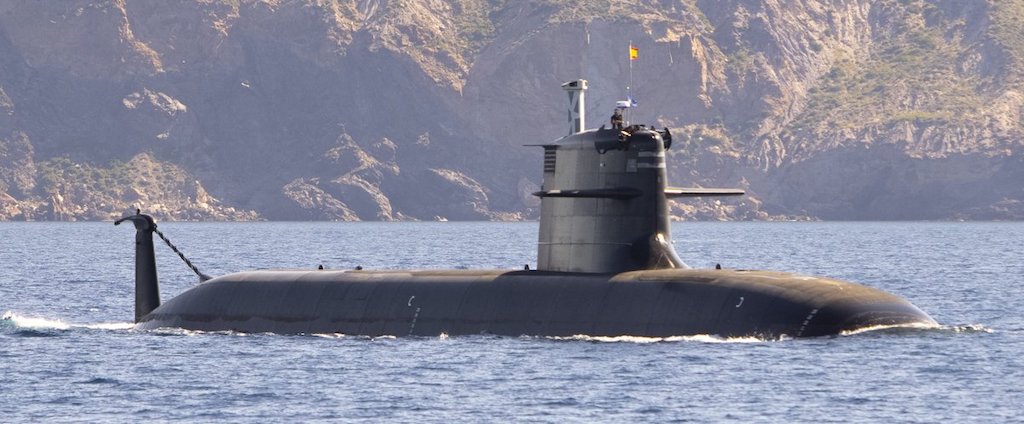
According to the agreement, Navantia would carry out the design of the P75(I) submarines, based on its S-80 class submarines, the first of which was launched in 2021 and is undergoing sea trials before its delivery to the Navy at the end of 2023.
In addition to the S-80 class, Navantia participated in the design and construction of the Scorpene class submarines together with DCNS (now Naval Group) from France, which have been exported to Chile and Malaysia. Navantia has also participated in the Scorpene submarines (Kalvari class) built in India.
The P75(I) program requires the integration of an AIP system. Navantia's third-generation AIP solution is the most advanced and efficient AIP system, as well as being environmentally friendly. It is the most compact, easy to operate, and maintain. It uses bioethanol as a hydrogen source, which is cost-effective, easy to obtain, and does not require any special infrastructure. The high hydrogen density in ethanol improves the system's efficiency. Ethanol, being in liquid form, eliminates the risks associated with hydrogen storage. Additionally, the wide availability of ethanol allows the system to be refueled anywhere in the world.
L&T and Navantia are also exploring possible avenues of cooperation in other military programs, as well as in green energy opportunities, including offshore wind through the Navantia Seanergies division.
An Event at the Spanish Embassy in New Delhi
The signing event was attended by S. N. Subrahmanyan, CEO and Managing Director of L&T, and Agustín Álvarez Blanco, Director of Naval Construction at Navantia. Also present were José María Ridao Domínguez, Ambassador of Spain to India, and Captain Fernando Álvarez, Defense Attaché, along with senior officials from L&T Defence and Navantia. The event was held at the Spanish Embassy in New Delhi.
After the signing of the agreement, SNS stated that “L&T is proud to collaborate with Navantia on this prestigious program of strategic importance for the nation's security. Navantia's great 300-year history in shipbuilding and its technical expertise give us a competitive advantage in this program and offer an eco-friendly solution. We are committed to providing the best possible solution for the Indian Navy's requirements at a competitive price.”
Agustín Álvarez Blanco stated that “we are proud to be the technological and design partner for the P75(I). We are also collaborating with L&T for the LPD program, for which we await the bidding. With these two prestigious programs for the Indian Navy, Navantia makes a key contribution to meet India's defense needs, a nation with which Spain shares an excellent relationship.”
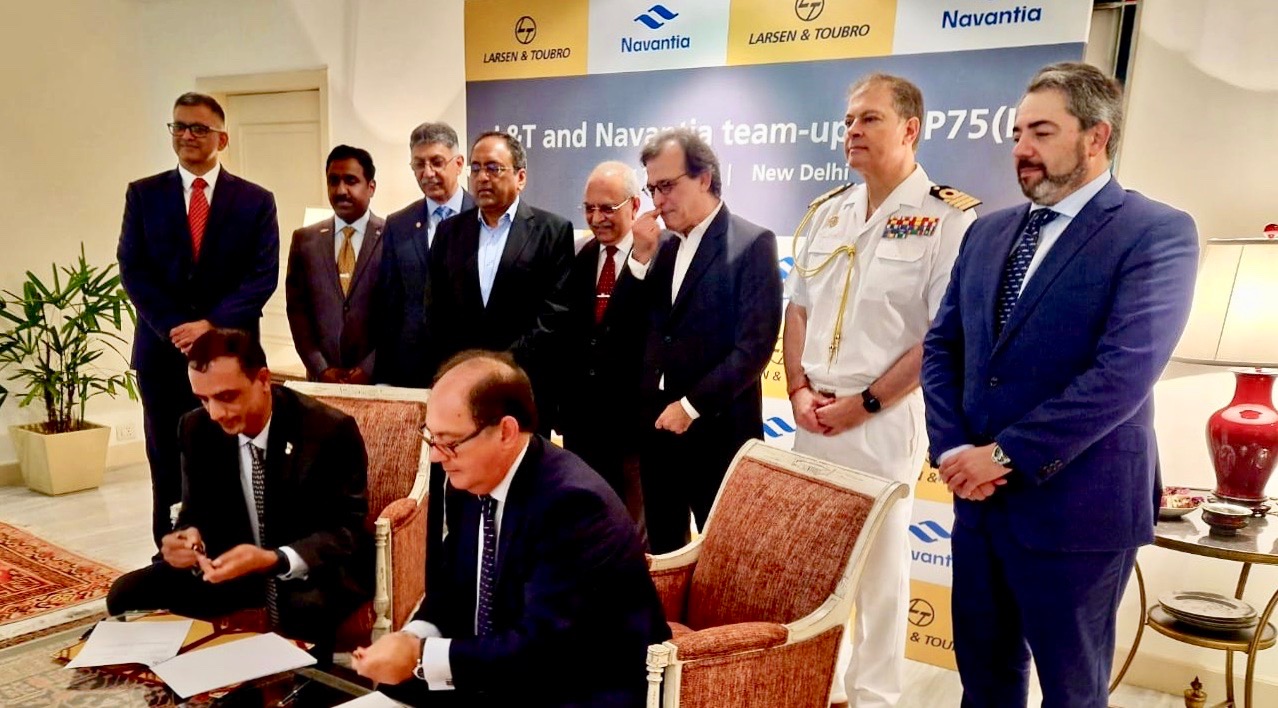
Signing of the agreement at the Spanish Embassy in New Delhi
Photos: provided
Tags


Related posts
👁️ 2,644 

- by Redacción
- 5 days ago
Navantia UK presents its bid to build three floating docks for the Royal Navy
👁️ 3,156 
👁️ 8,765 
- by Redacción
- 4 weeks ago
Navantia Puerto Real Launches New BAM IS “Poseidon” (A 21) This Friday
Most Recent
👁️ 1,153 
👁️ 2,655 
👁️ 18,341 