


The Government Highlights the Role of LNG in the Energy Transition
Alejandro Aznar, president of the Spanish Maritime Cluster, received Teresa Ribera, third vice president of the Government and Minister for Ecological Transition and the Demographic Challenge (MITECO), this Friday at a new breakfast organized by the Spanish Maritime Cluster.
In his presentation, the president of the Cluster defended the ship as “the most environmentally friendly and sustainable means of transport: the one that, for every ton per kilometer of activity, consumes less fuel, emits less CO2, and generates fewer external costs.”
Aznar explained how the shipping sector has been supporting the IMO in the adoption and implementation of new environmental agreements for over 50 years, which has allowed the sector to further strengthen its sustainability credentials.
However, this sector now faces a different scenario, in which the European Union intends to regulate regionally in an area traditionally governed by the IMO. “We do not oppose the goal: to make Europe and its industries a global benchmark for sustainability. But we need the current technological reality of the sector to be introduced and considered in the political debate, and that not only goals are set, but also the means to achieve them,” the president stated.
Minister Teresa Rivera also referred to the challenges facing maritime transport in the decarbonization effort. “It is a sector where technological alternatives are not well defined and for which support is essential,” she stated. The minister highlighted the “crucial importance of developing sea highways” and the role of liquefied natural gas (LNG) in the decarbonization of maritime transport. “I wish all large ships were LNG-powered,” she emphasized.
Rivera stressed the importance of offshore wind energy in the transition, which “could account for half of wind energy generation in Europe by 2030.”
MITECO plans to publish a specific roadmap for this renewable energy in the coming months.
The vice president concluded her speech by stating that “Spain is a country that proudly lives by the sea, both from within, on solid ground, and from the marine activities themselves. It remains, however, largely unknown regarding its potential and challenges, and our obligation as present generations is to work together to identify the smartest way to harness and manage them.”
All sectors related to the sea are represented in the Spanish Maritime Cluster. “This diversity of partners allows us to have a comprehensive view from the industry perspective, channel opinions, and communicate maritime concerns and needs to the Administration, fostering public-private collaboration,” Alejandro Aznar indicated.
The Cluster currently has more than 120 partners from all sectors related to the sea: maritime transport; navy and defense; shipbuilding and repair; recreational boating industry; maritime engineering and auxiliary industry; extractive fishing and marine aquaculture; ports and port services; marine energies; marine research; R&D agents; training organizations; unions and professional associations; culture, heritage, and social welfare.
Photo: provided
Tags


Related posts
👁️ 397 

👁️ 489 
👁️ 280 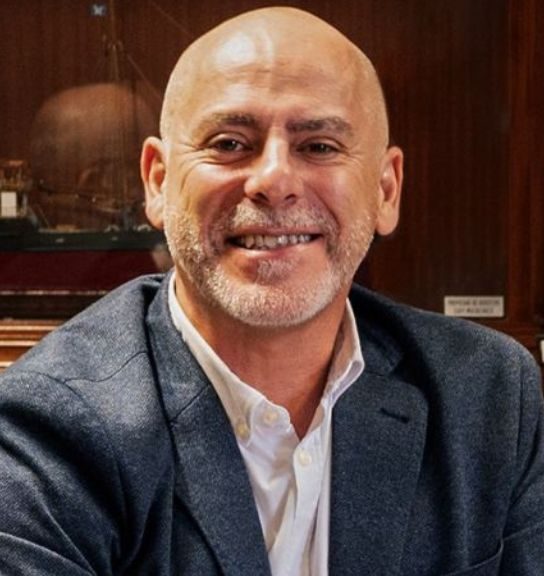
Most Recent
👁️ 1,942 
👁️ 3,348 
👁️ 2,003 