


A Drug Trafficking Case from Colombia at the Port of Cádiz
Since Colombian mafias opted to convert their traditional emerald business into the more profitable cocaine trade, the fleet of the Transatlantic Company that made stops in that beautiful country has sometimes been involuntarily involved in cases related to the world of drug trafficking, causing uncomfortable problems for the crews and ground staff, as a consequence of the drift of investigations and police and/or judicial inquiries.
While at the port of Cádiz in my capacity as fleet inspector, I received a phone call from one of the ships, informing me that they were experiencing an abnormal oil loss through the stern shaft. The ship "Guadalupe I" was at the time of the call near the Azores on its return journey to Spain.
After exchanging views on the breakdown with the chief engineer, we agreed to adopt a series of measures that could help minimize the leak, planning to communicate again a few hours after implementing them to evaluate the results. Indeed, the next day I received another call from the ship and was informed that while there had been a considerable reduction in the loss after refilling the system with a higher viscosity oil, the problem had not been completely resolved. Given the seriousness of the situation, we believe that the best solution is to carry out an emergency dry docking to identify and solve the problem.
The ship was initially scheduled to dock at the port of Barcelona, but since the incident needed to be resolved as quickly as possible to avoid undesirable contamination and possible damage to the shaft and bearing, an emergency stop in Cádiz was decided.
The ship arrived at the gates of the Cádiz shipyard dock at the scheduled time on the designated day and was dry docked late in the afternoon. It was planned to start work early the next day; before leaving, I put on some waterproof boots and went down to the dock to examine all the underwater works and the components within them.
When I arrived at the bow, I noticed something strange: the protective grille of the seawater intake for the emergency fire pump was not the original bronze one and had recently been replaced with an iron sheet, held in place provisionally by only four screws. With the help of a flashlight, I looked through some crude and asymmetrical holes drilled in the sheet to allow water access, and to my surprise, I saw several bulges deposited inside the housing covering the grille.
Without touching anything and quickly, I contacted the then head of the Civil Guard, with whom I had a good friendship. He was at that moment at his home in the barracks located near the shipyard. Immediately, the colonel, accompanied by two plainclothes officers, boarded the ship, and together with the ship's mechanic, who was equipped with the necessary tools, I accompanied them to the suspicious location. Once there, the mechanic removed the screws that precariously held the grille, revealing four prism-shaped boxes made of several millimeters thick steel sheet, lined with a layer of fiberglass to protect against saltwater and its corrosive effects. We moved the boxes to the shipyard's machinery workshop to use a mechanical saw to examine the suspicious contents, and when the first box was subjected to the cutting machine, a white powder began to appear mixed with the iron shavings.
About thirty kilos of pure cocaine made up the shipment that the mafias were trying to transport using such an ingenious system from Barranquilla to Europe, most likely to Marseille or Genoa, which were then among the scheduled stops for the ship. A diver, without raising the slightest suspicion, would be responsible for removing the merchandise that another diver had deposited in such a discreet location while the ship was docked in the port of Barranquilla. Unfortunately for the smuggling mafias, an unexpected breakdown aborted the operation.
Early the next day, as planned, the work began, and it was reported according to protocol to the Ship Inspection, where I was informed that the ship was detained by the court and that it would not be granted permission to sail until some proceedings involving it in drug trafficking were clarified and resolved.
I immediately went to the San José courts where I contacted the duty judge who had opened the proceedings after the corresponding complaint filed by the Civil Guard. I detailed to her how the events had unfolded, which perfectly matched the account of the Civil Guard's complaint, and clarified that neither the crew nor the owner had any responsibilities or involvement in the reported events and that if the ship incurred any delays due to the complaint, someone should be held responsible for the inconveniences and lost profits caused.
Her Honor asked me if I could somehow prove the non-involvement of the crew or owner in the events. I answered affirmatively and made myself available to corroborate my statement, but for that, she would need to come aboard. Her response was a resounding yes, and she indicated that she would do so in the early afternoon of that same day.
Punctually, accompanied by a judicial police officer, whom she instructed to remain in the car while she formalized the necessary proceedings aboard, I invited her to board the ship; we first went to the captain's office, where she subjected him to a series of protocol questions regarding the voyage, the ship, and the crew; after finishing the inquiry with the captain, I accompanied her to the owner's cabin where I provided her with a diver's suit, gloves, and safety shoes, suggesting that it was necessary for her to put them on.
Her Honor, who broke all the stereotypes of the macho Schopenhauer, emerged from the cabin perfectly dressed in a few minutes, attracting the attention of both crew members and shipyard workers. First, I accompanied her to the bow tunnel, whose ladder of more than fifteen meters she descended without the slightest difficulty until reaching the level of the fire pump. There, I showed her, from the inside of the ship, the niche used by the drug traffickers and the tube that connected it to the pump. We then went down to the dock, and I showed her again from the outside of the hull of the mobile housing of the crime, after explaining to her the impossibility of access by the crew to the location from inside the ship, her Honor understood perfectly and immediately told me that the ship was free of blame and that it had permission to sail.
And so it happened, and so I tell you.
Photo: Mike Griffiths (shipspotting.com)


Related posts


- by Juan Carlos Díaz Lorenzo
- 3 years ago
The Maritime Life of the First 'Almudena' (1961-1974)

- by Juan Carlos Díaz Lorenzo
- 4 years ago
The Ship “Camino” (1970-1982), Naval Registration of Barcelona
👁️ 357 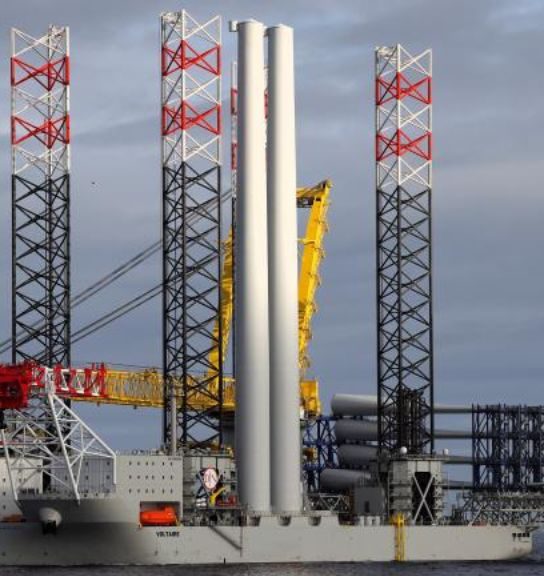

Most Recent
👁️ 926 
👁️ 840 
👁️ 1,086 