

Castellón Port Tests New Robotic Technology for Underwater Inspections
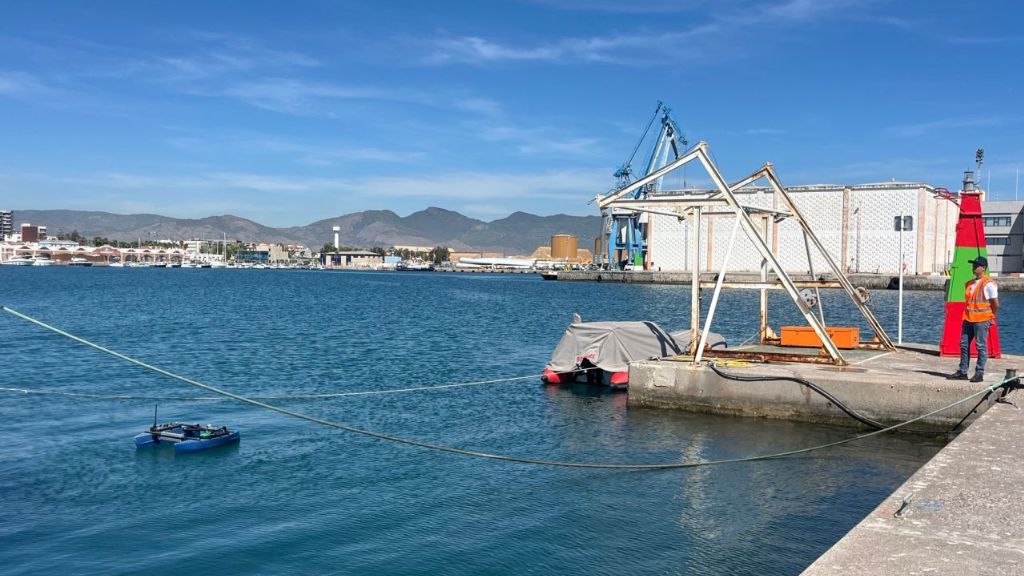
The Castellón Port has hosted tests by the Research Center for Robotics and Underwater Technologies at Jaume I University to see how surface-navigating robots can work together with those operating underwater.
The goal is to develop technology that allows for the inspection, maintenance, and repair of marine infrastructures more safely, especially in hard-to-reach areas. These systems will facilitate remote operations and reduce the need for people to intervene directly in certain tasks.
During this latest experiment, researchers tested a system that allows for the coordination of a surface autonomous robot with an underwater one. The aim was to verify that both can work together and to know in real-time the position of the underwater robot from the surface platform.
To achieve this, the system combines two three-dimensional LiDAR sensors with the navigation data of both robots. This information allows for determining their location and simultaneously building a map of the environment in which they operate.
The technology uses a method known as SLAM, which enables a robot to locate itself while creating a map of its surroundings. The innovation of CIRTESU lies in applying this system in a coordinated manner to both the surface and the seabed.
In this way, the person responsible for supervising the operation remotely can consult a joint and updated representation of the positions of both robots and the important elements of the environment.
Photo: Castellón Port


Related posts
👁️ 526 

- by Redacción
- 12 hours ago
IFM Investors, owner of TCTenerife, acquires British port operator ABP for $13.4 billion
👁️ 1,691 
👁️ 2,956 
- by Redacción
- 12 hours ago
The container ship "Barcelona Maersk" makes its first call at the port it is named after
Most Recent
👁️ 526 
👁️ 7,719 
👁️ 1,149 